Feature Voting: When It Works and When It Doesn't
· 6 min read · by the Loopful team

Feature voting is one of those ideas that sounds settled.
Customers post requests, other customers upvote them, and the ones with the most votes rise to the top. Demand becomes visible. Everyone can see what people want.
Then six months later, the top request is something you already decided not to build, while a request tied to churn has only a handful of votes.
Are those numbers actually telling you anything?
They are. Just not what most people assume.
What a vote actually is
A vote is one person saying this matters to me too.
That's the whole meaning. It's a small, low-friction signal, and its value comes from being repeated by many people rather than from any single click.
What a vote is not: a measure of urgency, a measure of value, a promise, or a decision. It doesn't tell you how much revenue is attached, how hard the thing is to build, or whether the person would have paid for it.
Most of the trouble with feature voting comes from expecting one signal to carry all of that weight.
When feature voting works well
When it consolidates demand
Before a voting board, the same request reaches you as an email, a support ticket, a sales call and a Slack message, and nobody can tell whether that's four people or one person being persistent.
A board with voting collapses that into one number attached to one request. That is one of the most useful things voting does, and it works from day one.
It also gives people something to do other than post. If someone starts typing an idea that already exists and sees it surfaced, they'll usually add their vote instead of creating a fifth version of the same thing, which keeps demand consolidated rather than split into near-identical requests that each look small.
When you want to see momentum
A count is a total. A count over time is a trend.
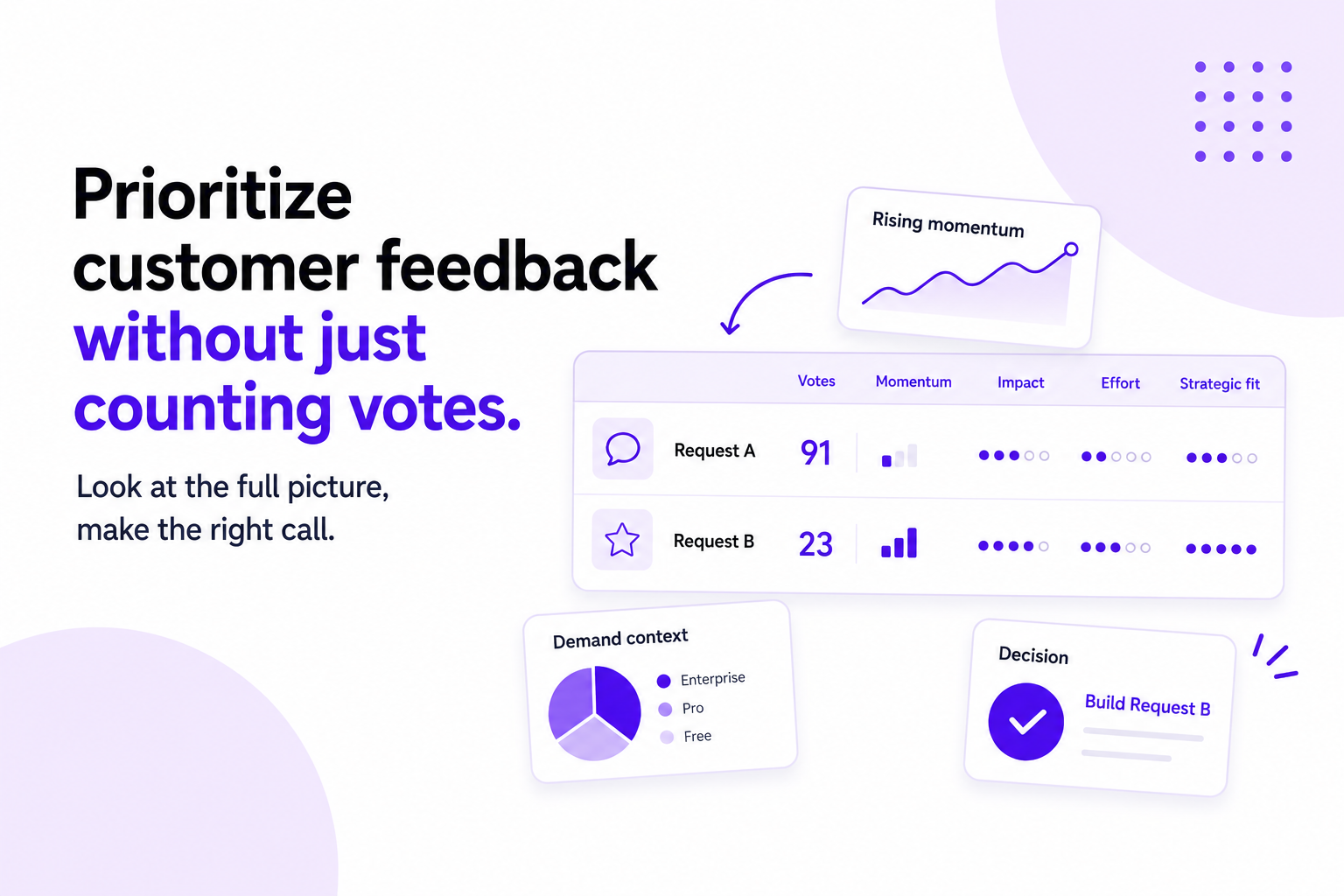
A request that accumulated votes slowly over several years tells you something different from one gaining attention quickly. Total votes show popularity; recent activity shows momentum.
When it reduces repeat questions
A public board with visible vote counts answers "has anyone else asked for this?" and "are you aware of it?" without a single support ticket. For small teams, that alone can justify the board.
When it tells you who cares
Votes carry names. Once you can see which accounts, plans or segments are behind a request, the count stops being an anonymous number and becomes something you can actually reason about.
When feature voting misleads you
When raw vote counts lack context
Demand concentrated among free users and demand concentrated among large accounts are different signals, and neither automatically wins. Free-tier demand can point to an activation problem worth solving. Enterprise demand can point to revenue at risk. A raw count flattens the difference.
The same applies to who is doing the voting. A board is answered by the people who visit it, which skews toward power users and the already-engaged. That's a useful group to hear from. It just isn't the whole customer base.
When old requests outrank new ones
Vote counts accumulate. A request from 2023 has had years to collect votes; one from last month hasn't. Sorting purely by total quietly ranks by age.
When the request is a solution, not a problem
Customers describe what they want in terms of the fix they imagined. "Add a CSV export" might really be "I can't get my data into the tool my finance team uses." Voting on the proposed solution can hide the fact that a different solution would serve everyone better.
When something gets voted up that you're never going to build
This happens to every board. A request collects real demand and still doesn't fit the product you're building. Voting can't tell you that, and leaving it at the top with no answer is how a board loses credibility.
When people can't vote on what isn't there
The most expensive problems are often invisible to a feedback board. Nobody posts "your onboarding lost me on day two." They just leave.
Votes are a signal, not a decision
This is the whole thing in one line.
Customers understand their own problems better than anyone. They don't know your architecture, your roadmap, what the rest of your feedback says, or what your product is trying to become. Handing the roadmap to a vote count outsources product strategy to whoever showed up and clicked.
Useful prioritization reads the vote alongside a few other things:
How many customers want it
Which customers want it
Whether demand is rising or has been flat for years
What impact solving it would have
What it costs to build and maintain
Whether it fits where the product is going
None of those replaces the vote. Together they turn a number into a decision you can defend.
How to use feature voting well
Show who voted, not just how many. Names and segments turn a count into context. A request concentrated within a particular customer segment can mean something different from the same count spread across unrelated accounts.
Sort by recent activity as well as by total. Two views, two different conversations. One shows what has always been popular, the other shows what's happening now.
Weight votes when it matters. Not to say some customers count more as people, but because a request concentrated in one segment is a different business case than the same count spread thinly.
Merge duplicates, don't delete them. Merging keeps the votes and the comments and consolidates demand into one place. A single request with consolidated votes is a clear signal; the same demand split across several near-identical requests is much harder to read.
Read the comments. The count tells you how many. The comments tell you why, and the why is usually where the actual product insight is.
Say no out loud. A clear "not planned" with a short reason is more respectful than leaving a popular request in limbo for two years. It also keeps the rest of the board meaningful.
Close the loop when it ships. People are more likely to participate again when they can see that feedback led somewhere. A board where requests disappear into silence stops collecting useful signal, because people stop bothering.
Feature voting vs. other ways of measuring demand
Voting isn't the only instrument, and it isn't always the right one.
Surveys measure questions you chose. Voting surfaces issues customers raise themselves.
Sales and churn conversations reach customers who may never use your feedback board.
Usage data shows what people actually do, rather than what they say they want.
Customer interviews help uncover the problem underneath the requested solution.
The clearest picture comes from reading these together. When votes, revenue conversations and usage data all point the same way, you can move with confidence. When they disagree, that disagreement is itself information.
Votes don't create commitments
A popular request can still be the wrong thing to build.
The problem starts when customers assume enough votes guarantee a place on the roadmap, or when your team starts working down the board in order.
Accepting a request is not committing to it. A request can collect votes, comments and useful context without ever becoming planned work.
Your job is to listen carefully. Your team's job is still to decide.
How Loopful approaches voting
In Loopful, voting is the starting point rather than the verdict.
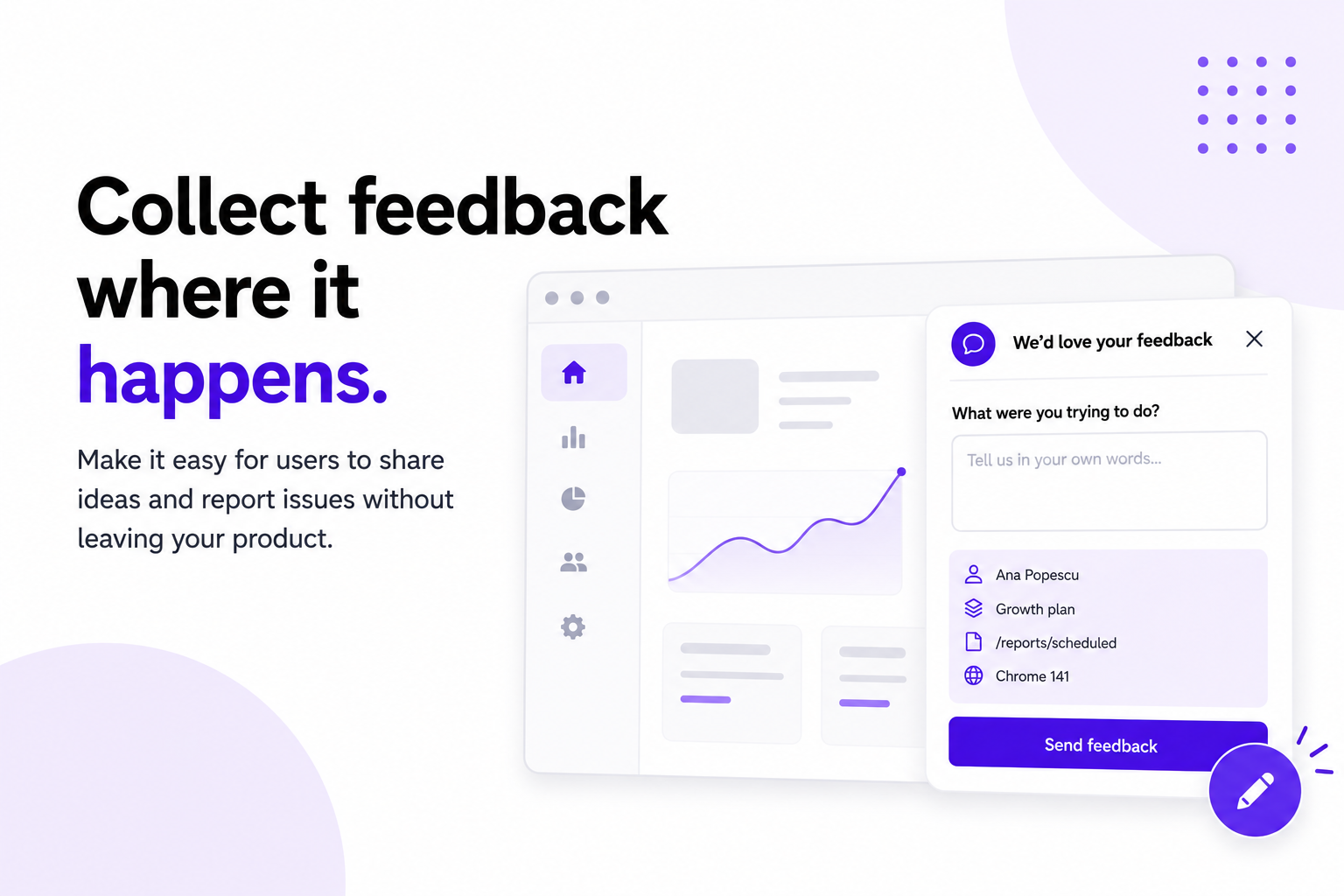
Customers post ideas on public or private boards, vote on what matters to them, and add context in the comments. Similar posts surface as people type, and anything that slips through can be merged in one click without losing votes or comments, so demand stays consolidated.
From there, insights show top and rising requests and how demand breaks down by customer segment. Weighted votes and impact and effort scoring add the context a raw count can't carry.
Requests you decide to pursue can be shared on the public roadmap. When something ships, you publish a changelog entry, link the requests it resolves, and everyone who voted or commented hears about it, which gives customers a reason to keep participating.
Feature voting works best when it helps you see demand without pretending to make the decision for you.
The vote tells you that someone cares. The context helps you understand why and how much it matters. The decision still belongs to your product team.